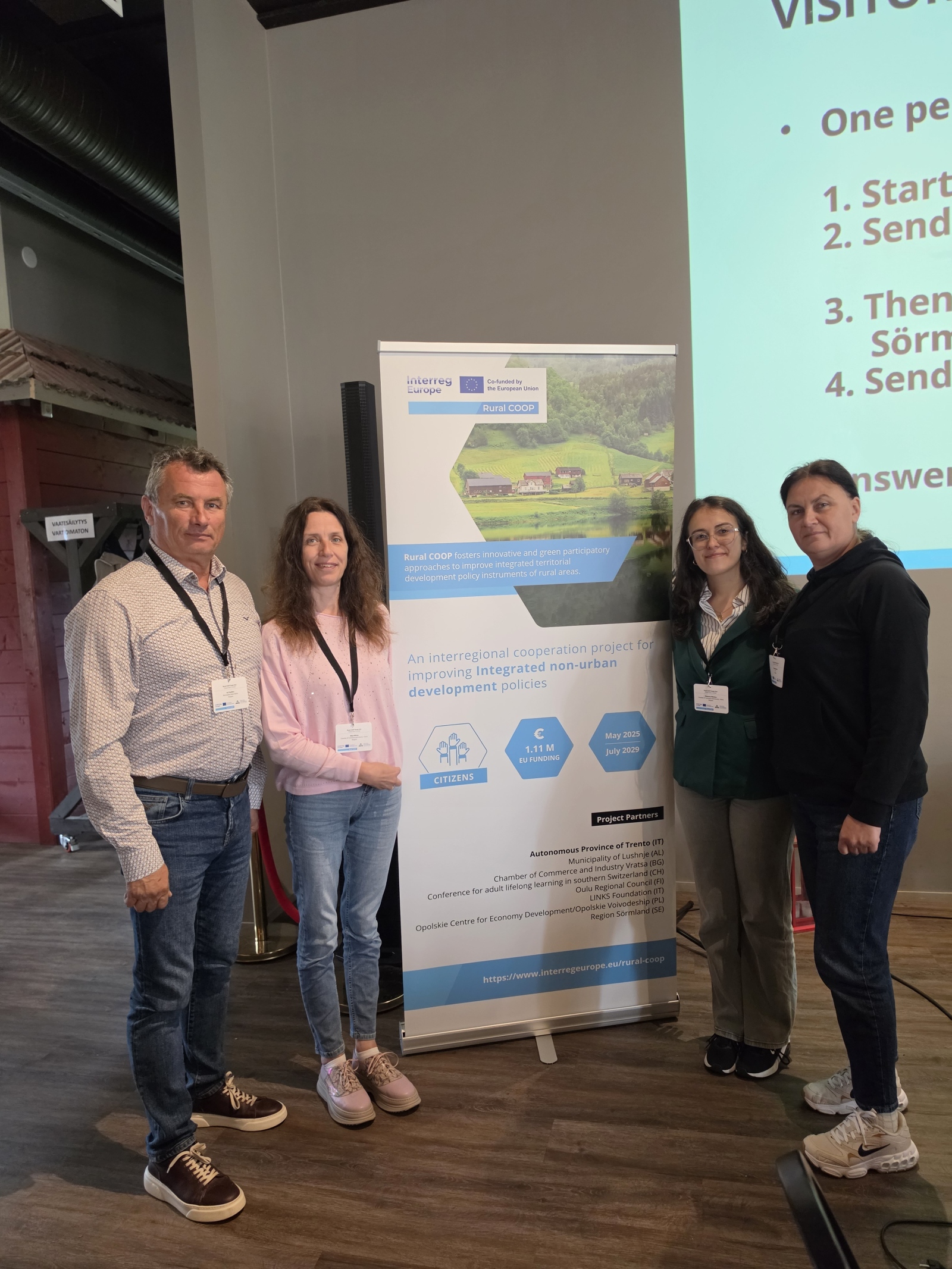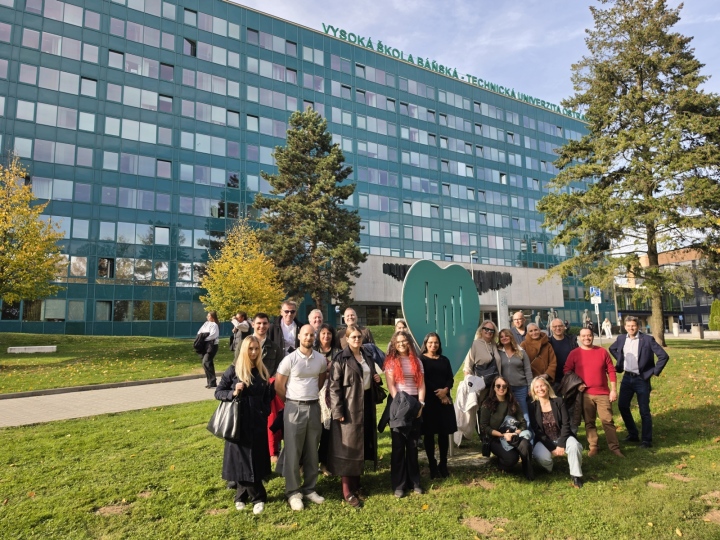
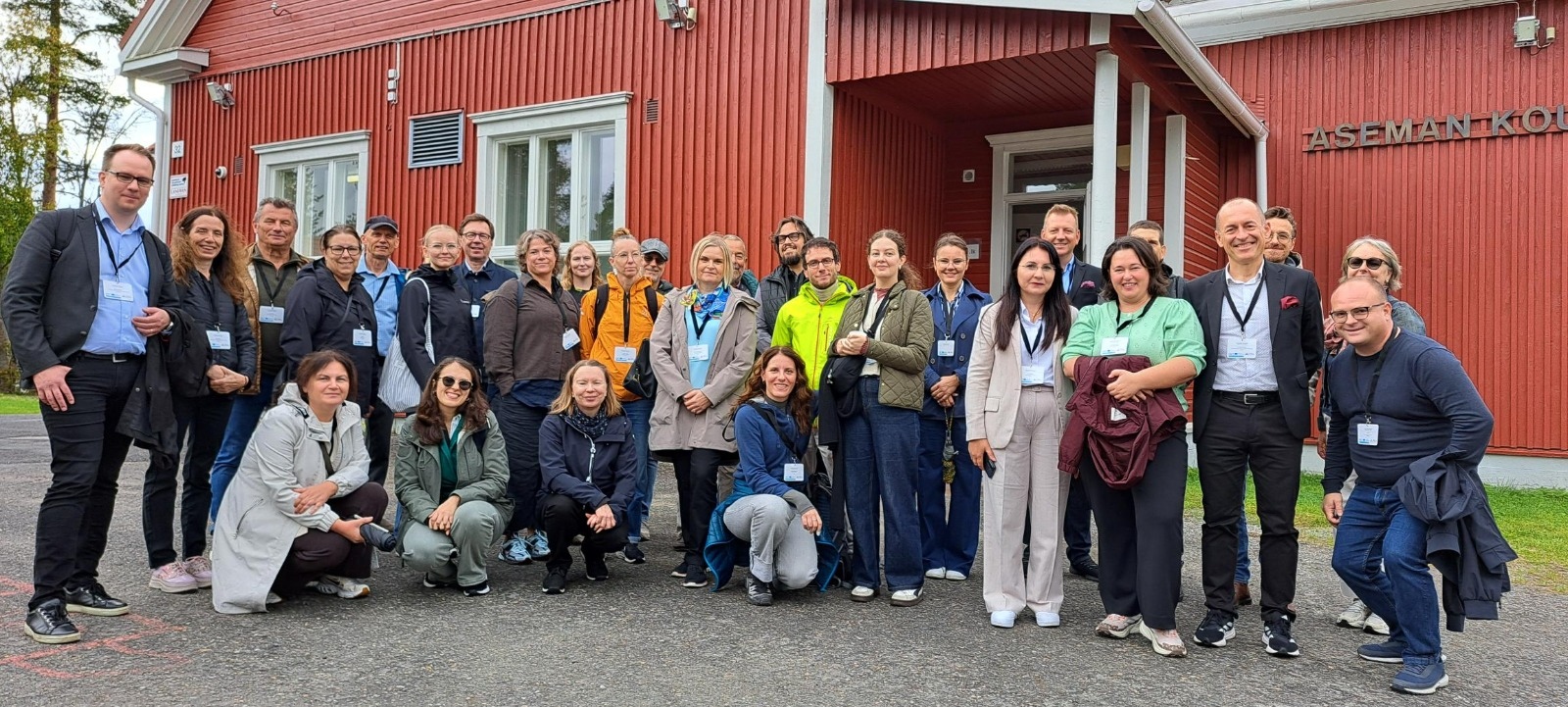
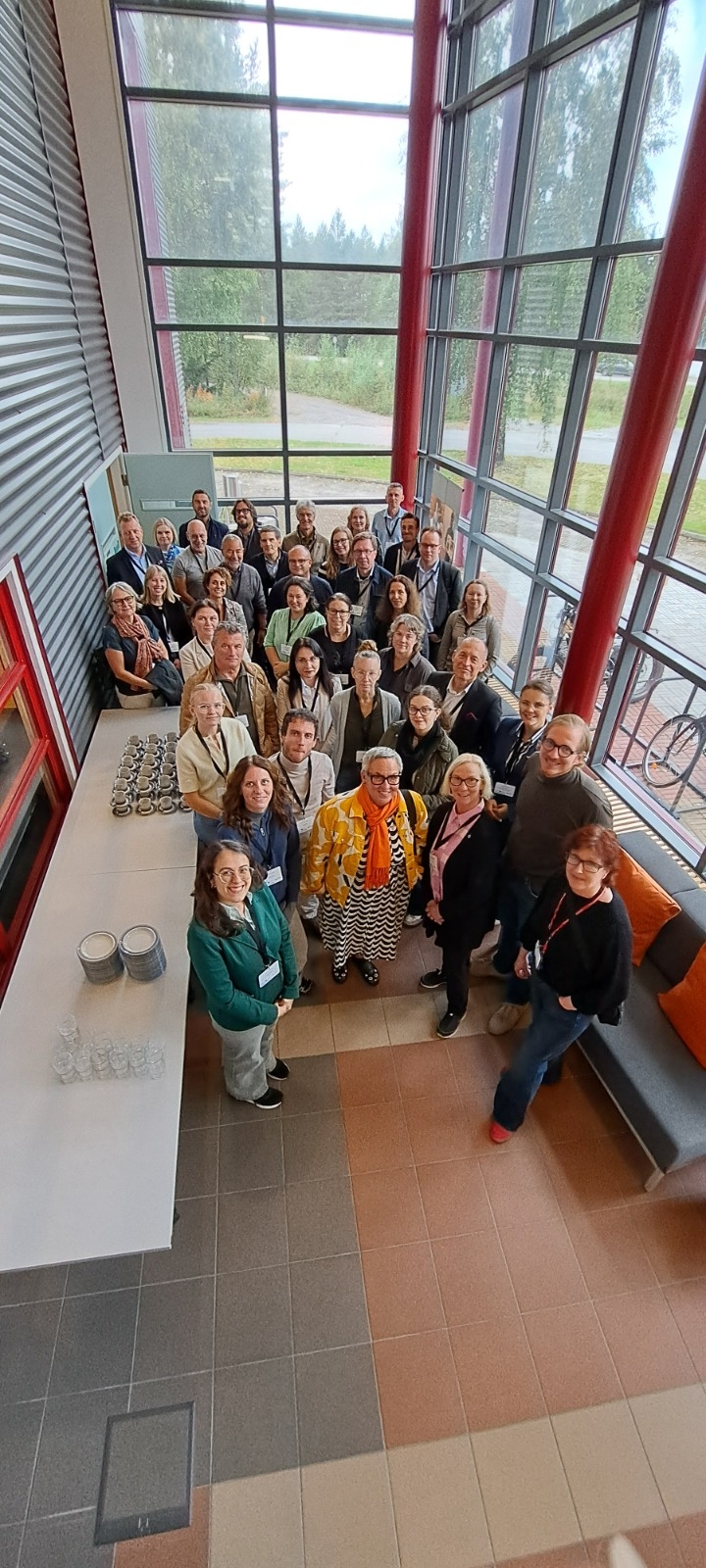
On 2–3 September 2026, representatives of the Chamber of Commerce and Industry Vratsa (CCI Vratsa), Byala Slatina Municipality and Local Action Group – Byala Slatina participated in the first study visit organised within the Rural COOP project – “Rethinking Sustainable and Integrated Development in Non-Urban Areas: Cooperative Foresight and Anticipation”. The study visit took place in the Oulu Region, Finland, and included an exchange of good practices from Region Sörmland, Sweden.
The Bulgarian delegation included Ms Maya Milova, Executive Director of the Chamber of Commerce and Industry Vratsa; Ms Ekaterina Nikolova, Marketing Expert at CCI Vratsa; Mr Ivo Tsvetkov, Mayor of Byala Slatina Municipality; and Ms Tanya Todorova, representative of the Local Action Group – Byala Slatina.
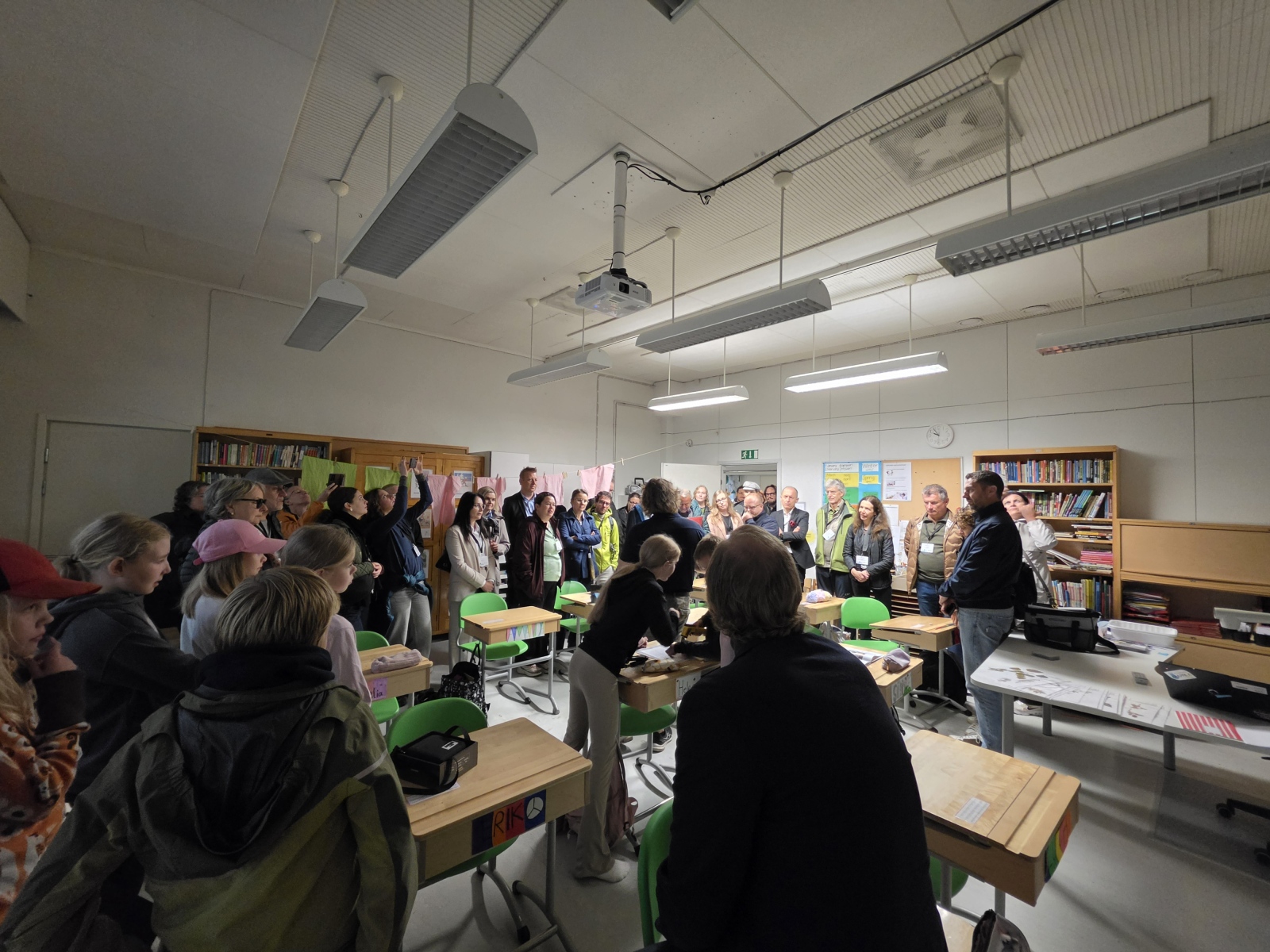
The first day of the visit started at the Municipality of Ii, Finland, where participants explored local practices related to sustainability and efficient resource management. Among the initiatives presented was the 50/50 energy and resource savings model, aimed at improving energy efficiency and actively involving the local community in achieving environmental goals.
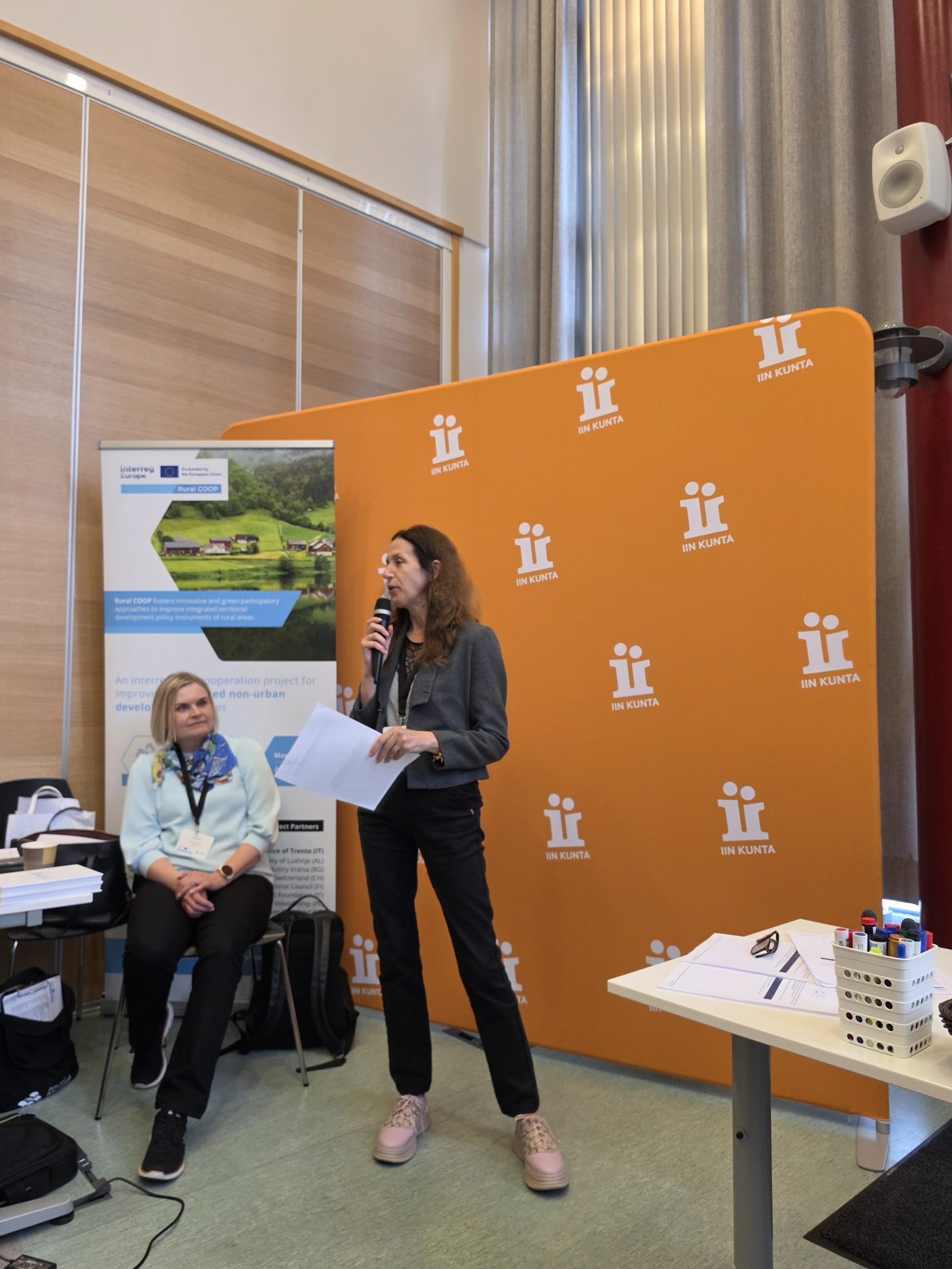
During the visit to Micropolis – a regional development and innovation centre, participants learned more about the development of the Oulu Region and the approaches applied to support the sustainable transition. Through an interactive working session, project partners discussed challenges related to the development of less urbanised territories, opportunities for improving policy instruments, and the transferability of the presented good practices to different local contexts.
The second part of the visit focused on the experience of Region Sörmland, Sweden, with an emphasis on circular economy solutions. The Bulgarian participants explored examples such as ReTuna Recycling Mall in Eskilstuna, the Katrineholm Reuse Centre and the Sörmloop initiative, which supports the development of small and medium-sized enterprises through cooperation between municipalities and the application of circular economy principles.
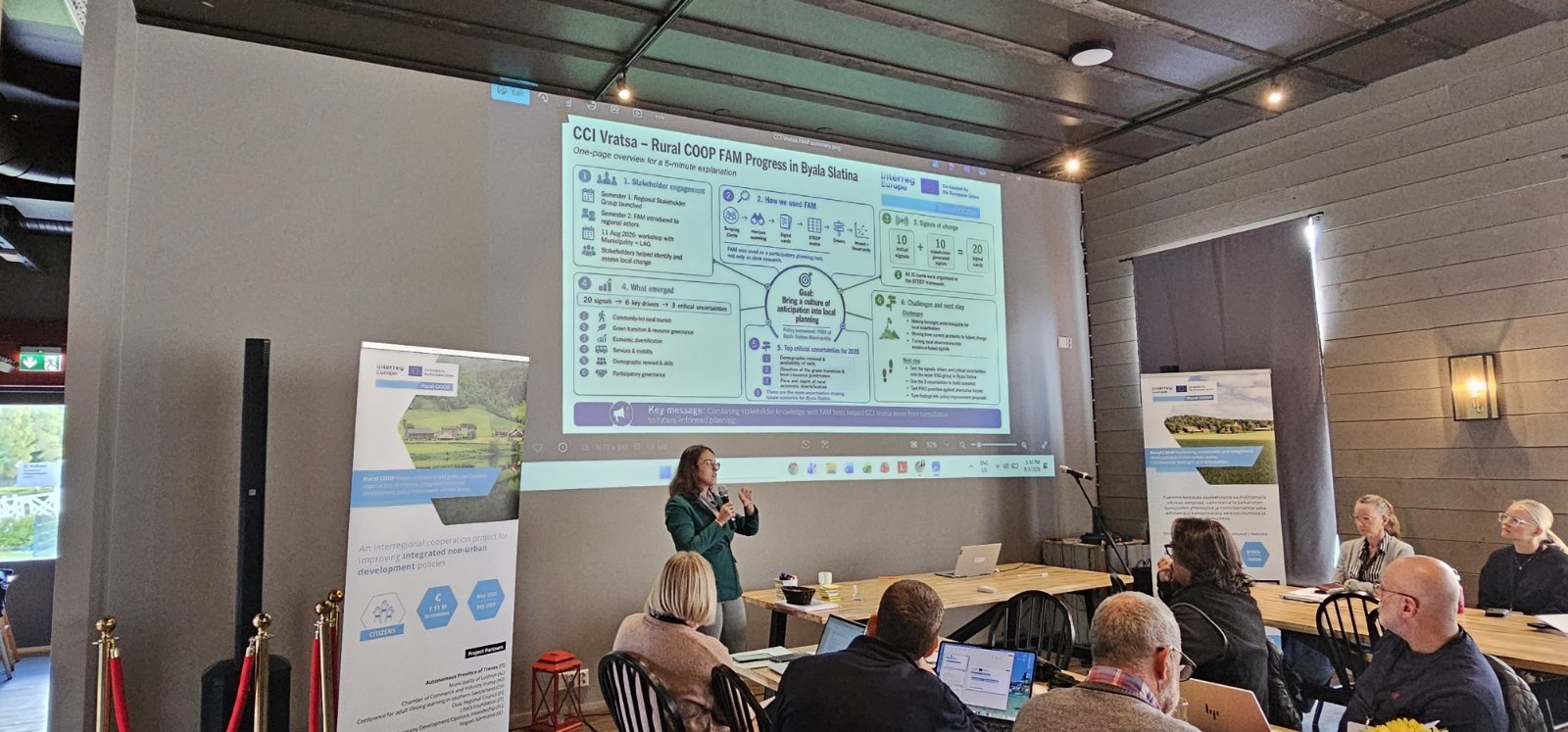
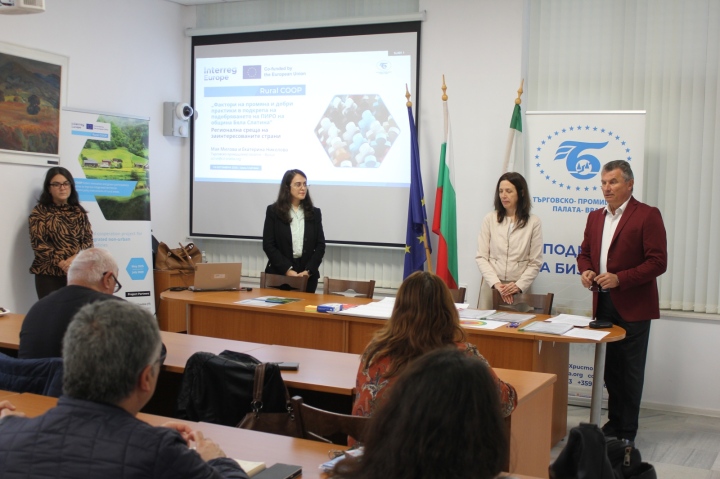
During the study visit, the Chamber of Commerce and Industry Vratsa presented the progress achieved within the Rural COOP project at local level, including the results of the joint work with stakeholders in Byala Slatina Municipality. The presented activities included the use of Foresight approaches, the process of identifying and analysing signals of change, development drivers and critical uncertainties, as well as opportunities for applying the green communities approach in planning sustainable local solutions.
The knowledge gained and the experience exchanged during the visit will support the ongoing work of the Bulgarian project team related to the development of the policy instrument – the “Plan for Integrated Development of Byala Slatina Municipality 2021–2027 (PIRO)”. The presented approaches will be further analysed regarding their applicability to the local context and their potential for adaptation to the needs and opportunities of the municipality.
CCI Vratsa also presented the main principles and approaches for the implementation of the Peer Review Methodology, for which the Chamber is responsible within the project. The methodology aims to support knowledge and experience exchange between partner regions, identify opportunities for improvement, and facilitate the adaptation of development policies and instruments to local needs.
The study visit provided an opportunity for Rural COOP partners to explore successful approaches to sustainable territorial development implemented by Finnish and Swedish organisations, as well as to exchange experiences on cooperation mechanisms between local authorities, regional structures, businesses and civil society.
Participation in the first study visit confirmed the importance of international cooperation and the exchange of good practices as key tools for developing sustainable solutions for rural and less urbanised territories. Through Rural COOP, CCI Vratsa continues to support joint learning, capacity building and the development of solutions based on the real needs of local communities.
.jpg)